ServicesRoof Repair
Roof Repair in Spencer That Gets Past the Old Patches
Older roofs carry history. Tar over a nail hole, a few mismatched shingles, flashing nobody has touched in decades. We find where the water really gets in, fix that spot properly and show you what we found.
Fixing the Cause, Not the Stain
A water spot on the ceiling is rarely under the hole. Water runs along the deck, down a rafter or across the top of a wall before it drips. So we start in the attic and on the roof, and we follow the path back to where it starts.
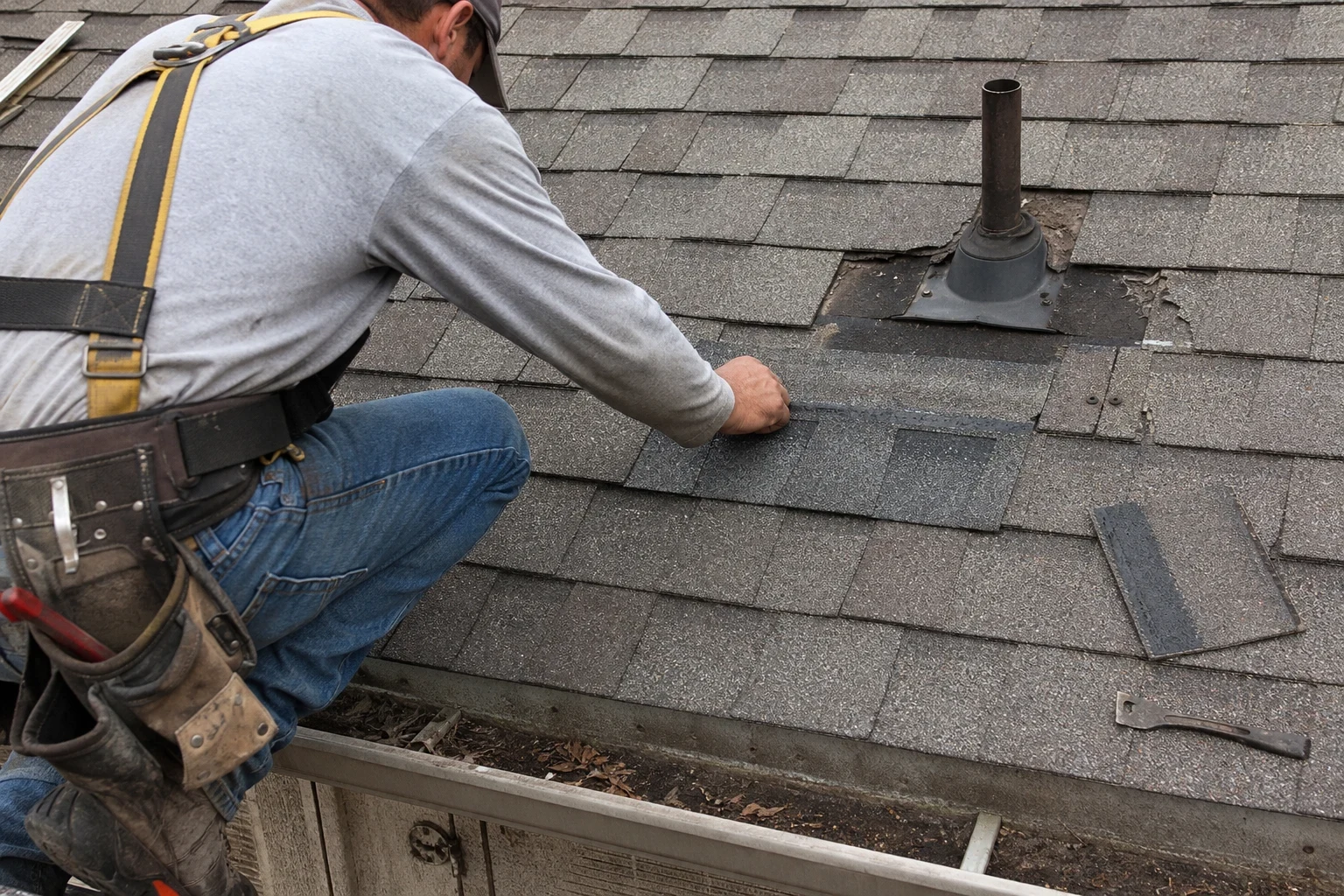
On a lot of older houses, the problem is a past repair. Roof cement smeared over a chimney gap dries, cracks and holds water against the wood. A new shingle nailed into rotten decking pulls loose in the first strong wind. We take the old fix off, look at what is under it and do it right.
Repair makes sense when the deck is solid and most of the shingles still have life left. If they don't, we will say so and walk you through roof replacement instead. That honest answer comes from 30+ years of roofing experience, not from a sales sheet.
What a Roof Repair From Us Includes
Finding the leak's source
We look at the attic, the decking and the shingles to find where water actually gets in, and we give you photos of it.
Chimney and wall flashing
Aging step flashing and counterflashing often rusts out or was installed wrong to begin with. We put in new metal rather than covering it with more tar.
Vent and pipe boots
The rubber around plumbing vents cracks after years in the sun. It's among the most frequent leak points we see, and it's an easy fix.
New shingles, matched closely
Broken or missing shingles get replaced, with color and style matched as near as current products allow.
Removing old patches
We strip off built-up roof cement and mismatched shingles so we can see the deck and seal it the right way.
Decking repair where needed
Any soft or rotted sheathing beneath a leak is cut out and replaced before the shingles go back down.
Signs Your Roof Needs a Repair
- Stains on the ceiling or walls
- Brown rings or bubbling paint mean water is getting in somewhere. The longer it goes, the more wood it soaks.
- Shingles lifted or missing
- Strong spring winds peel back tabs that have lost their seal. Once a shingle lifts, the nails under it are open to rain.
- Black tar patches on the roof
- Lots of patches usually means the same area keeps failing. That spot needs a real fix, not another coat.
- Granules piling up in the gutters
- Some loss is normal. Heavy piles mean shingles are wearing thin in places.
- Daylight or damp wood in the attic
- If you see light through the decking or feel soft, dark wood near a vent or chimney, water has been getting through for a while.
How a Repair Job Goes
- 1
We talk on the phone
Describe the stain, drip or missing shingle you have noticed. It helps us to know roughly how old the roof is and whether anyone has patched it before. Then we pick a day to come out.
- 2
We look and take pictures
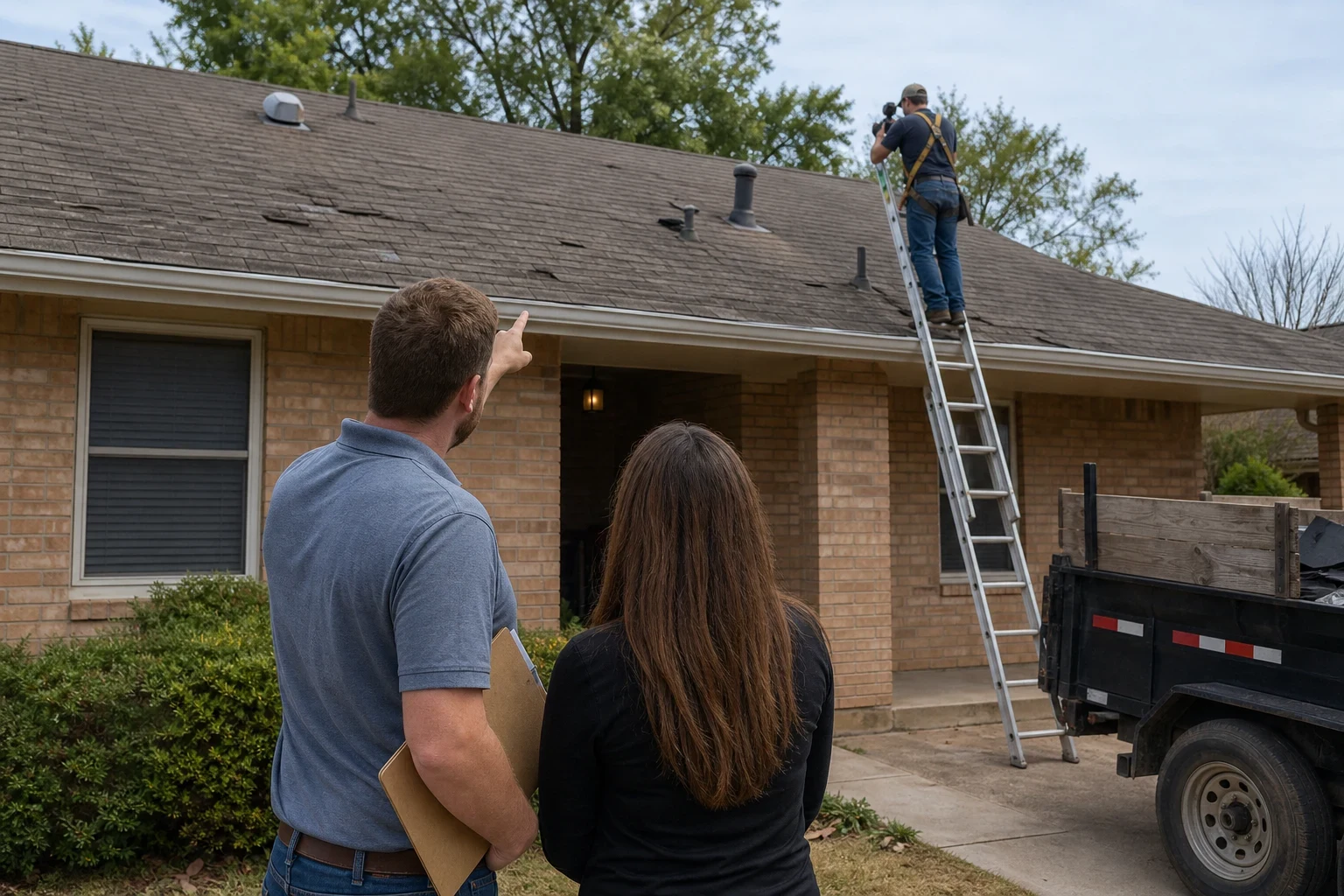
We go into the attic and up on the roof. You see photos of the leak path, the old repairs and anything else worth knowing.
- 3
You get a written estimate
Each part of the repair is listed line by line. If we think the roof is past repair, we tell you that too.
- 4
Repair day
Most repairs take a few hours. We cover plants near the work area, strip back to sound material, make the fix and seal it.
- 5
Cleanup and a last check
We pick up debris, run a magnet over the yard for nails and show you the finished work.
What Moves the Price of a Repair
Two leaks that look the same from inside can cost very different amounts to fix. What matters is what we find once the shingles come up. We price it after we have looked, and we write down every part of the job.
- What's under the shingles
- Sound decking keeps a repair simple. Rot from a slow leak means cutting out and replacing wood first.
- Past repairs to undo
- Thick layers of tar or a second roof layer add time, because we have to take them off to see the problem.
- Pitch and access
- A steep roof or a spot over a tight side yard takes more safety setup and more care.
- Matching materials
- Older shingle styles are often discontinued. Finding the closest match can change what the repair costs.
Common Roof Repair Questions
- Can't you just patch over the patch that's already there?
- It's possible, but we rarely advise it. Stacking patches hides the real problem and keeps moisture against the wood. We'd rather remove it, look underneath and fix it one time.
- Will the repair blend in with my shingles?
- We match as closely as we can. Sun fades shingles, and some older styles aren't made anymore, so a repair can stand out a bit at first. We'll tell you before we start how close we can get.
- How can I tell whether to repair or replace?
- If the problem is in one area and the shingles elsewhere still lie flat with their granules intact, a repair is usually the better value. If shingles are brittle and curling all over, or new leaks keep showing up, a replacement may cost less in the long run. When you're unsure, a roof inspection gives you a clear picture first.
- Do your repairs come with coverage?
- Ask us when you call. We go over what is and isn't covered for your job when we give you the estimate, before any work starts.
- Will my insurance cover the repair?
- That comes down to the cause. Age and wear usually aren't covered, but hail and wind damage often are. If a storm caused it, our Storm Damage Repair page explains how we document the damage before you file.
Let's Find Your Leak
Tell us what you are seeing and we will set a time to look. We work in Spencer, Midwest City, Choctaw and nearby towns.